Securing professional pest control service Chattanooga homeowners rely on establishes an impermeable physical and chemical barrier against invasive river basin infestations. Property structures along the Tennessee River face continuous pressure from wood-destroying organisms, seasonal insect surges, and structural rodent intrusions seeking harbourage in foundation voids.
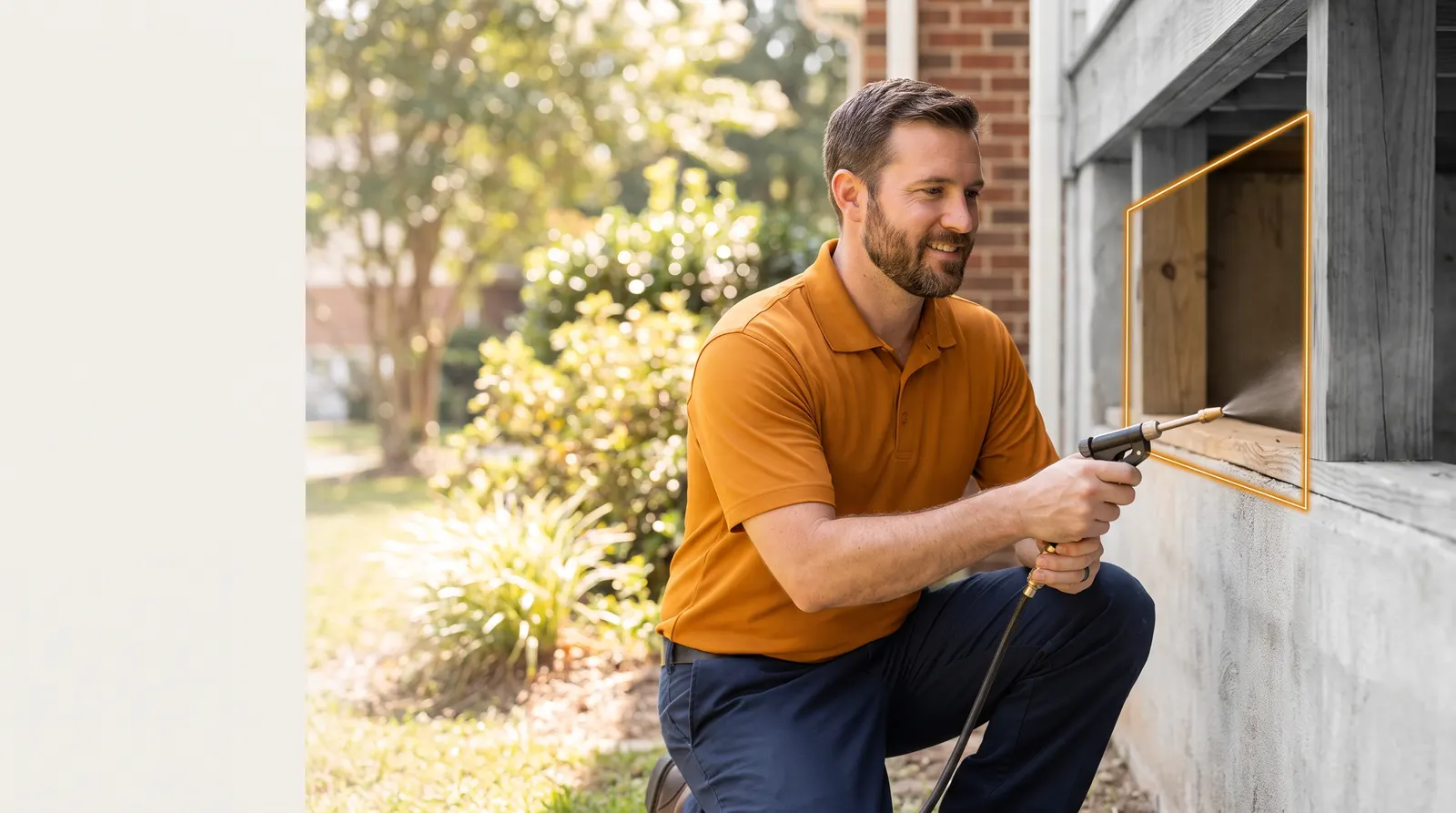
Pest control service in Chattanooga is a specialized structural inspection, targeted extermination, and perimeter barrier defense designed to eliminate residential insect and rodent activity across Hamilton County.
Every service reflects the same meticulous attention to detail, whether it's a single job or a larger pest control service project across Chattanooga.
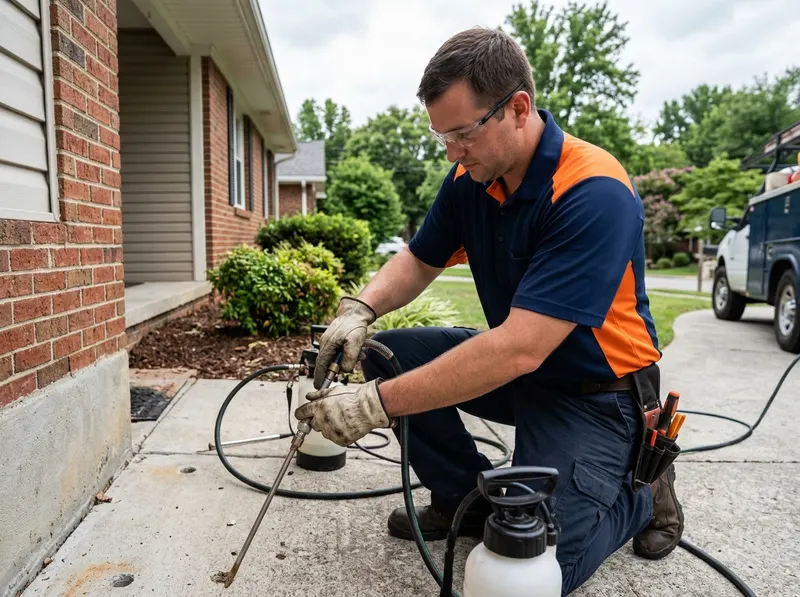
Liquid trenching using non-repellent termiticides creates an undetectable transfer zone around concrete footers, perimeter stem walls, and interior crawl space piers. This protocol systematically eradicates subterranean termite colonies nesting deep within moist river-valley clay soils before structural floor joists, rim joists, and load-bearing studs experience permanent structural failure. Technicians dig narrow six-inch trenches along the foundational perimeter, injecting four gallons of mixed solution per ten linear feet to build a continuous, unbroken chemical barrier that binds directly to soil particles. Where concrete walkways, porches, or driveways abut foundation sills, precise half-inch slab drilling delivers non-repellent termiticides down into the subterranean substrate at uniform twelve-inch intervals, cutting off hidden subterranean ingress routes into wall cavities.
Get a quote →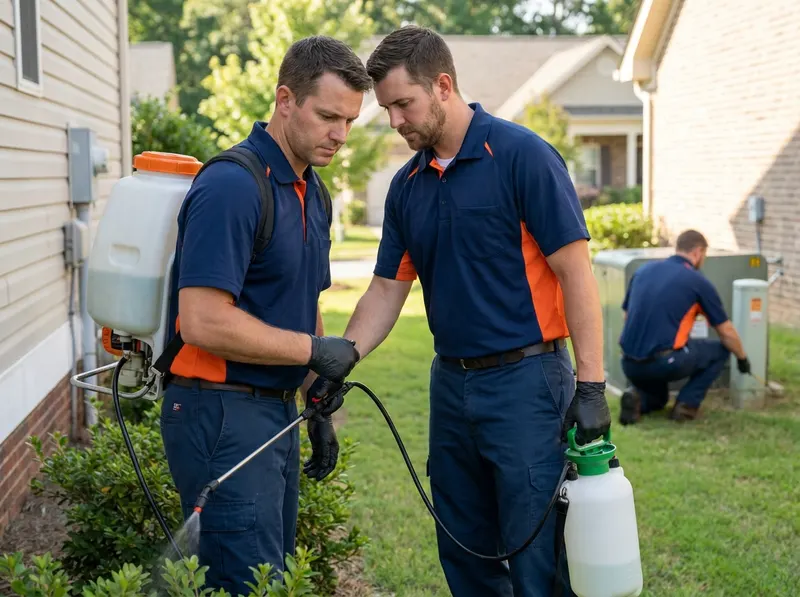
Comprehensive exterior perimeter barrier applications establish a continuous ten-foot band of repellent along foundation walls, eaves, entry doorways, and plumbing penetrations. This preventative treatment halts perimeter insect migration, garden ant trails, and invasive spider colonization without requiring interior chemical dispersion. The technician applies microencapsulated water-resistant formulations engineered to withstand seasonal summer downpours without washing off exterior masonry or decorative brick skirting. Service runs include treating window sills, sweeping down spider webs and mud dauber tubes from second-story soffits, and laying granular barrier lines through mulch beds and gravel borders to intercept pests up to twenty feet from the foundation edge.
Get a quote →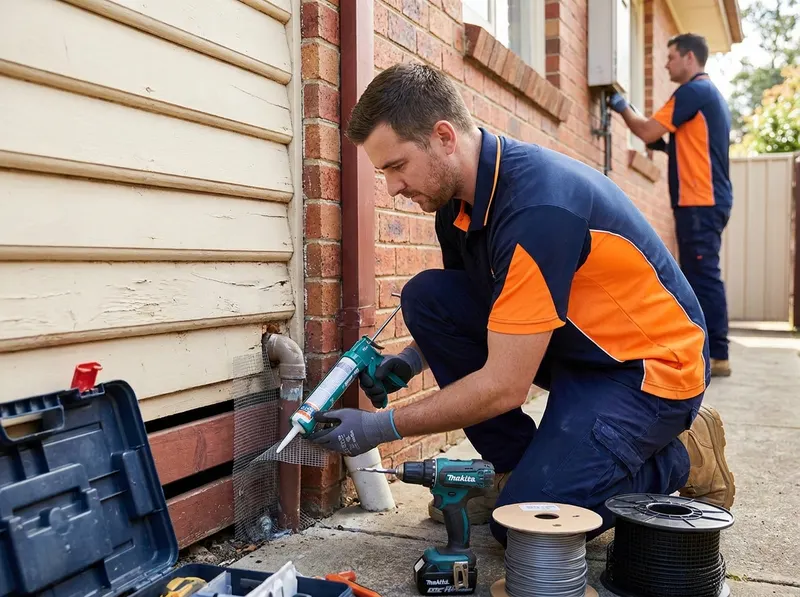
Heavy-gauge galvanized hardware cloth, specialized elastomeric sealants, and metal flashing permanently seal crawl space vents, roof returns, weep holes, and foundation cracks against rodent access. Combined with mechanical capture mechanisms inside enclosed attic cavities, this systematic approach clears indoor populations without leaving hazardous poisoned carcasses inside wall partitions. Technicians conduct detailed smoke and mirror inspections to locate structural gaps as narrow as one-quarter of an inch, which allow field mice and juvenile Norway rats to bypass exterior framing. After mechanical barriers are secured, interior capture grids are monitored over a multi-week staging process until zero activity is detected, followed by the enzymatic sanitization of contaminated crawl space vapor barriers and insulation battings.
Get a quote →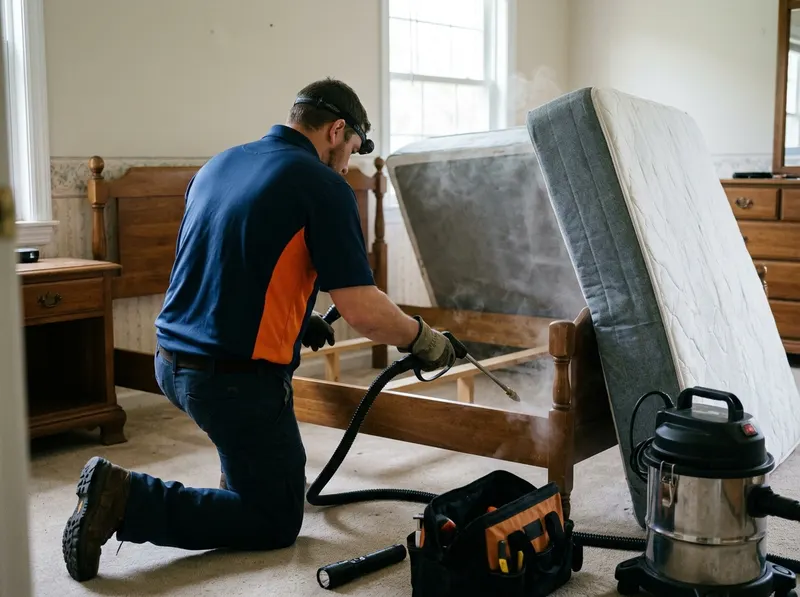
Integrated thermal applications paired with structural void insect growth regulators penetrate baseboards, mattress seams, electrical plates, and structural crevices. This aggressive multi-point eradication method destroys heat-sensitive adult insects and hidden egg clutches in a singular, focused deployment. Industrial electric heaters raise internal ambient temperatures to a lethal threshold between 120 and 135 degrees Fahrenheit, maintaining that heat plateau for four continuous hours while high-velocity air movers distribute thermal energy deep into structural wall cavities and upholstered furniture. Specialized residual dusts containing amorphous silica gel are blown behind switch plates and door casings, creating an inorganic mechanical desiccant barrier that dehydrates any late-emerging nymphs that contact treated surfaces.
Get a quote →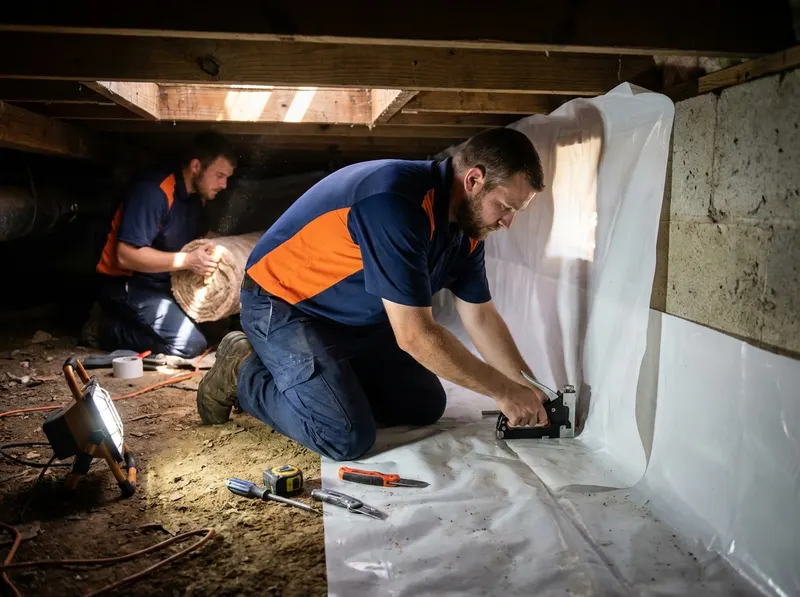
Installing heavy vapor barriers alongside mechanical dehumidification minimizes the crawl space humidity levels that draw subterranean termites, moisture-loving wood borers, and millipedes. Lowering ambient moisture under subfloors halts the biological decay that accelerates pest reproduction cycles. The crew removes contaminated organic debris, levels soil surfaces, and pins twenty-mil reinforced polyethylene liners across dirt floors, wrapping piers and taping seams with waterproof butyl tape. Sealing crawl space foundation vents alongside dedicated commercial dehumidifier installations drives wood moisture content safely below fifteen percent, depriving powderpost beetle larvae and subterranean worker termites of the damp conditions required to digest structural cellulose fibers.
Get a quote →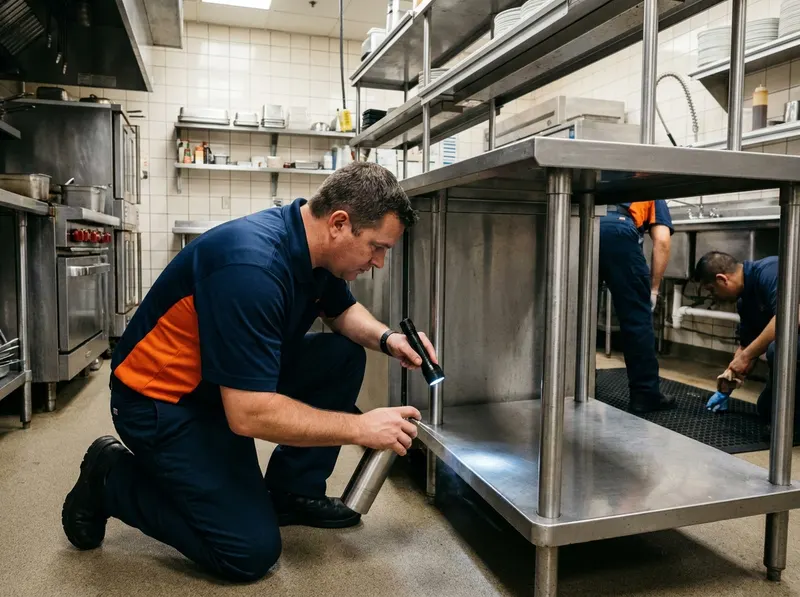
Strict regulatory sanitation inspections, precise insect growth regulator baits, and drain-line bio-enzymatic foamings eradicate German cockroach reservoirs and fruit fly breeding points in restaurant prep spaces. Protocols comply with Tennessee Department of Agriculture food handling regulations and sanitation codes. Technicians inject targeted bait matrices containing abamectin into stainless steel seam voids, motor housings, and electrical conduits where cockroaches congregate away from surface cleaning chemicals. Drain lines receive automated enzymatic applications that digest accumulated kitchen grease, gelatinous organic films, and sediment, eliminating the foundational breeding habitats that support drain fly and phorid fly outbreaks in commercial dishwashing zones.
Get a quote →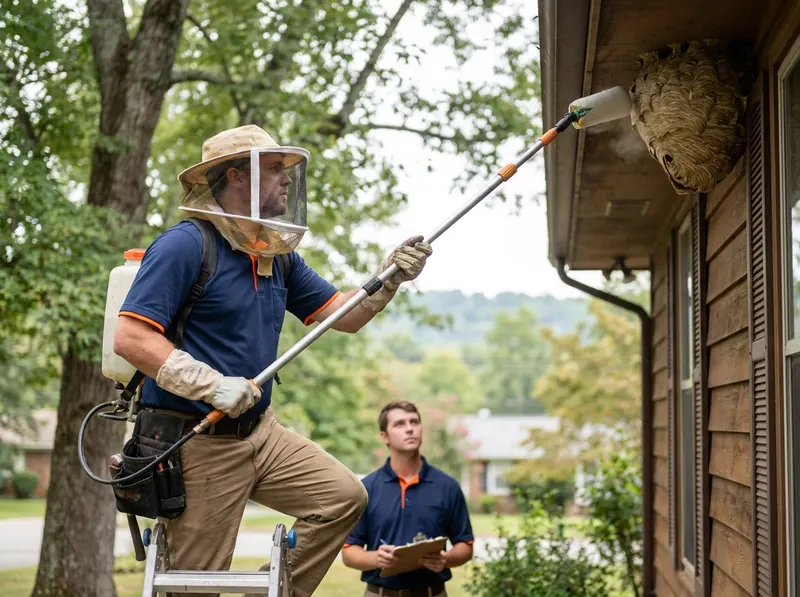
Direct mechanical removal and aerosol application neutralize aerial bald-faced hornet nests, underground yellowjacket cavities, and paper wasp colonies affixed to second-story overhangs. Technicians treat nesting voids with residual dust to prevent consecutive seasonal rebuilding by foraging queens. Technicians deploy telescoping applicator poles up to thirty feet high to inject quick-knockdown pyrethroid sprays directly into nest entrances, collapsing aggressive defense swarms before physically detaching the carton paper architecture. Underground yellowjacket burrows in garden beds or tree roots receive pressurized non-repellent dust injections followed by mechanical sealing, ensuring that subterranean queens and returning worker wasps do not rebuild inside the excavated root cavity.
Get a quote →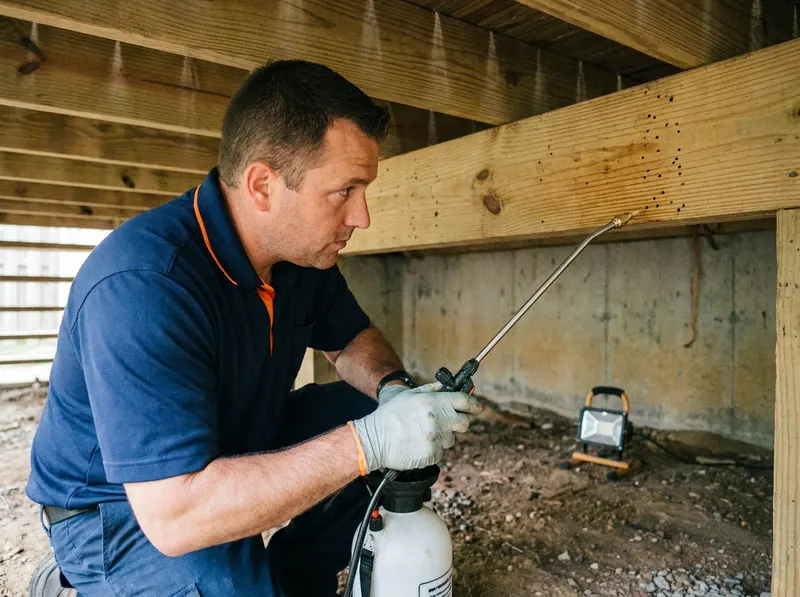
Direct penetrating borate salt spray applications treat exposed subfloors, historic hardwood framework, and cellar beams showing powderpost beetle pinhole emergence. The crystalline chemical saturation halts larval digestion, immunizing structural timber against sustained cellulose consumption. Technicians thoroughly wire-brush structural lumber to clear frass and surface mold before applying two coats of water-soluble disodium octaborate tetrahydrate. The chemical solution diffuses through wood fibers, penetrating several inches into timber cross-sections to kill boring beetle grubs as they feed, providing permanent structural protection that will not off-gas or break down under fluctuating ambient crawl space temperatures.
Get a quote →You get a firm, itemized quote for your pest control service before any work begins, no surprises, no pressure.
Careful prep, tidy work, and a full cleanup when we are done. We treat your home and belongings like our own.
The same trusted, background-checked team from the first call to the final check.
Selecting appropriate intervention protocols depends strictly on the target species, infestation density, and the architectural construction of the home. If a structure shows active wood damage, mud shelter tubes, or spring swarmers near foundational sills, choose dedicated liquid termiticide trenching and interior void injections. If the primary issue involves perimeter intruders such as smokybrown cockroaches, carpenter ants, and silverfish entering from landscaped perimeters, choose multi-zone exterior microencapsulated perimeter barriers.
If midnight wall-scratching, attic droppings, or damaged crawl space insulation are discovered, choose physical structural exclusion and targeted interior capture systems. The operational trade-off centers on upfront capital investment versus recurrence liability: localized spot treatments carry a lower initial expense but leave adjacent foundational voids vulnerable to satellite colonies, whereas continuous perimeter barriers and whole-structure exclusion demand a higher initial technical investment but eliminate seasonal structural re-entry across shifting river basin weather cycles. For structures built over damp crawl spaces, combining mechanical vapor encapsulation with a borate timber treatment addresses the root humidity issue driving wood-destroying organisms, whereas surface-only chemical sprays provide temporary insect knockdown without altering the structural moisture profile that invites recurring colonization.
When addressing stinging insects, choosing physical nest extraction over delayed baiting delivers immediate safety for outdoor spaces, though persistent foraging queens require residual microencapsulated dusts applied directly into structural voids to prevent consecutive seasonal rebuilding under eaves and trim boards. In rental units and high-occupancy structures, selecting thermal bed bug remediation over multiple synthetic chemical visits minimizes business interruption by neutralizing both viable eggs and mobile adults in a single operational window, balancing the higher initial equipment cost against repeated site visits and persistent tenant disruption.
Every project gets a firm, written price after a free on-site visit. Ranges below for orientation.
Tell us about your pest control service job and we'll send a clear, written quote, usually the same day. Or just call and talk to a real Chattanooga pro.
(615) 752-5977
Properties built along the lower elevations of Lookout Mountain and the rolling terrain near Raccoon Mountain Caverns encounter dense limestone karst geography paired with poorly draining clay. These physical conditions trap subterranean moisture directly against stone rubble foundations and crawl space sills, creating severe termite and carpenter ant pressure that riverfront flatlands rarely see. Structural variations between historic 1920s craftsman bungalows in St. Elmo and modern concrete slab constructions in East Brainerd require hyper-specific mechanical depth and subterranean chemical displacement strategies. Throughout older communities like Highland Park and North Shore, aging brick facades, porous mortar joints, and stone rubble foundations allow smokybrown cockroaches and field mice easy structural entry along basement headers, whereas newer residential developments in Hixson and Red Bank frequently battle subterranean termite incursions due to backfilled construction debris hidden beneath modern yard landscaping. The steep elevation drops throughout Lookout Valley and Belvoir also accelerate ground-level rainwater runoff, washing away conventional over-the-counter pesticide sprays and demanding heavy microencapsulated formulations that bond firmly to clay-rich soil particles and raw stone masonry without dispersing into surrounding Hamilton County groundwater channels.
Free estimates for Chattanooga & the surrounding area.
 Halvex Pest InterventionC