Structural rodent exclusion targets the mechanical interface where pests transition from outdoor terrain into conditioned residential structures. In river valley microclimates like Chattanooga, outdoor rodents migrate…
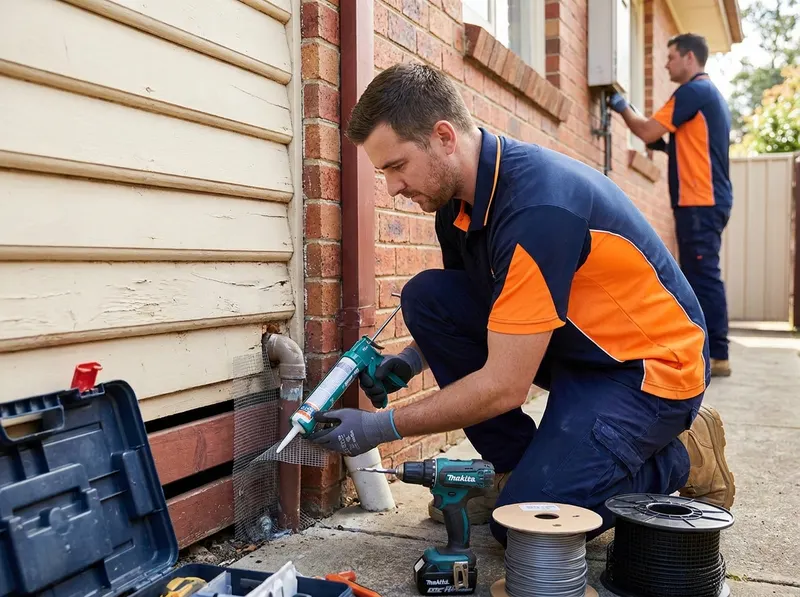
Structural rodent exclusion targets the mechanical interface where pests transition from outdoor terrain into conditioned residential structures. In river valley microclimates like Chattanooga, outdoor rodents migrate into residential crawlspaces and attics during late autumn drop-offs in ambient temperature. Standard interior snap traps or anticoagulants address current interior populations, but traps fail to stop subsequent external waves. Structural exclusion establishes an unchewable barrier along the building envelope. Mice can compress their bodies through openings measuring one-quarter of an inch, roughly the diameter of a standard ink pen, while juvenile Norway rats access structures through half-inch voids. Physical exclusion replaces ongoing baiting with permanent masonry, sheet-metal, and woven wire interventions.
Housing stock across Hamilton County presents distinct architectural failure points based on construction era and topography. In historic neighborhoods like St. Elmo and Highland Park, raised-pier foundations, settled sill plates, and aging floorboards create ground-level pathways. Conversely, hillside homes in Lookout Valley or river-adjacent properties near North Shore and Riverview frequently experience roof rat pressure along upper fascia boards, gutter lines, and soffit-to-roof transitions, where climbing trees offer bridge access. In post-war crawlspace homes common to Belvoir, Brainerd, and Red Bank, foundation vent screens corrode from soil dampness, allowing direct burrowing through crawl vents. Homes in Hixson and East Brainerd frequently present modern vinyl siding gaps and open weep holes at stone water tables.
The mechanical process adheres to a clear sequence: First, a complete envelope audit tracks rub marks, gnawed materials, and thermal signatures from grade level to roof ridge. Second, non-corrosive materials, specifically galvanized steel mesh, copper mesh, sheet aluminum, and metal-reinforced sealants, are physically anchored over exterior penetrations, utility conduits, crawlspace hatches, and flashing gaps. Third, one-way exit tunnels or mechanical capture systems are deployed inside the sealed envelope to clear lingering interior rodents without locking them inside wall voids to decompose.
Every job gets a firm, written price after a free on-site visit.
Tell us about your structural rodent exclusion job in Chattanooga and we'll send a clear, written quote, usually the same day.
 Halvex Pest InterventionC