Crawl space encapsulation pest defense addresses the primary driver of subfloor infestations in the Tennessee River basin: uncontrolled relative humidity. In river-adjacent zones like North Shore, Riverview, and along…
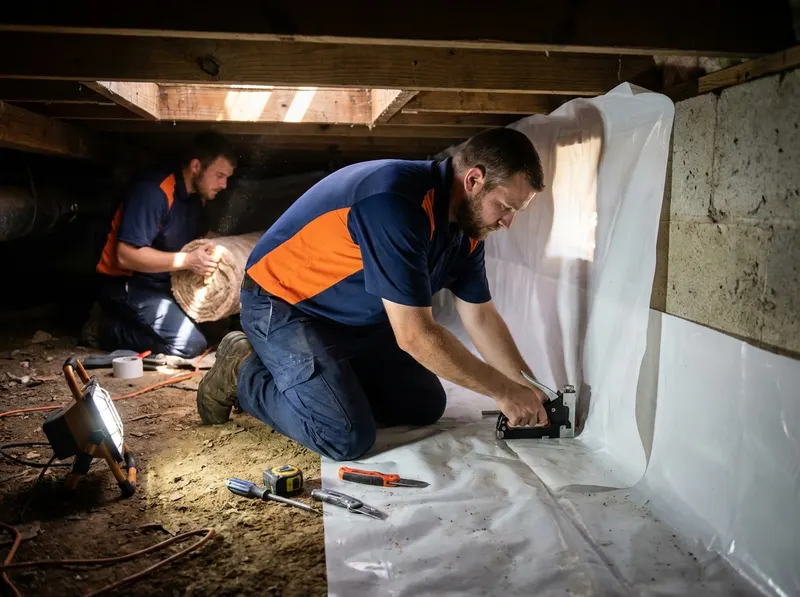
Crawl space encapsulation pest defense addresses the primary driver of subfloor infestations in the Tennessee River basin: uncontrolled relative humidity. In river-adjacent zones like North Shore, Riverview, and along the Tennessee Riverpark, ambient ground moisture routinely drives crawl space relative humidity past 70%. This saturated microclimate softens wood substructures, inviting fungal decay, wood-boring beetles, and subterranean termites. Concurrently, high-moisture air attracts aggregations of camel crickets, oriental cockroaches, and rodents looking for thermal shelter. Traditional open-vent foundation designs allow continuous pest access while pulling humid air straight up through subfloors via the stack effect, carrying particulate allergens and insect debris directly into living quarters.
Encapsulating the crawl space alters this biology entirely. The installation process lays a seamless, reinforced 12- to 20-mil polyethylene vapor barrier across 100% of the exposed dirt floor, overlapping seams by 12 inches and sealing them with heavy-duty acrylic tape. Technicians fasten the membrane 6 inches up masonry foundation walls and support piers, leaving a precise 3-inch inspection gap at the top to maintain code-compliant visual termite detection channels. Foundation vents, rim joist gaps, and exterior plumbing penetrations receive expanding polyurethane closed-cell foam and galvanized steel hardware mesh, physically blocking rodents from gnawing their way into the crawl space.
Decision guidance dictates that standard open-vent insecticide dusting works temporarily for isolated surface ant infestations, but homes with documented joist moisture content exceeding 18% require full encapsulation pest defense. The trade-off centers on upfront capital investment versus systemic structural failure: basic surface fogging requires indefinite reapplication every 90 days without stopping wood rot, whereas permanent encapsulation stops subterranean moisture migration, starves damp-loving insect colonies, and drops interior pest migrations without recurring chemical saturation. Properties located on clay-heavy, low-drainage soils in Brainerd, Belvoir, Highland Park, and St. Elmo gain direct protection against seasonal water pooling beneath floorboards.
Work sequences follow a four-stage process: 1. Technicians clear biological waste, old fiberglass insulation, and structural debris from the dirt floor. 2. Specialists execute targeted spray applications of disodium octaborate tetrahydrate onto exposed floor framing to eliminate fungus and wood-destroying insects. 3. Installers anchor the continuous vapor barrier across the ground and up all masonry piers. 4. Crews seal every exterior penetration, vent, and rim joist before introducing an automated crawl space dehumidifier calibrated to sustain subfloor humidity levels below 55%.
Every job gets a firm, written price after a free on-site visit.
Tell us about your crawl space encapsulation pest defense job in Chattanooga and we'll send a clear, written quote, usually the same day.
 Halvex Pest InterventionC